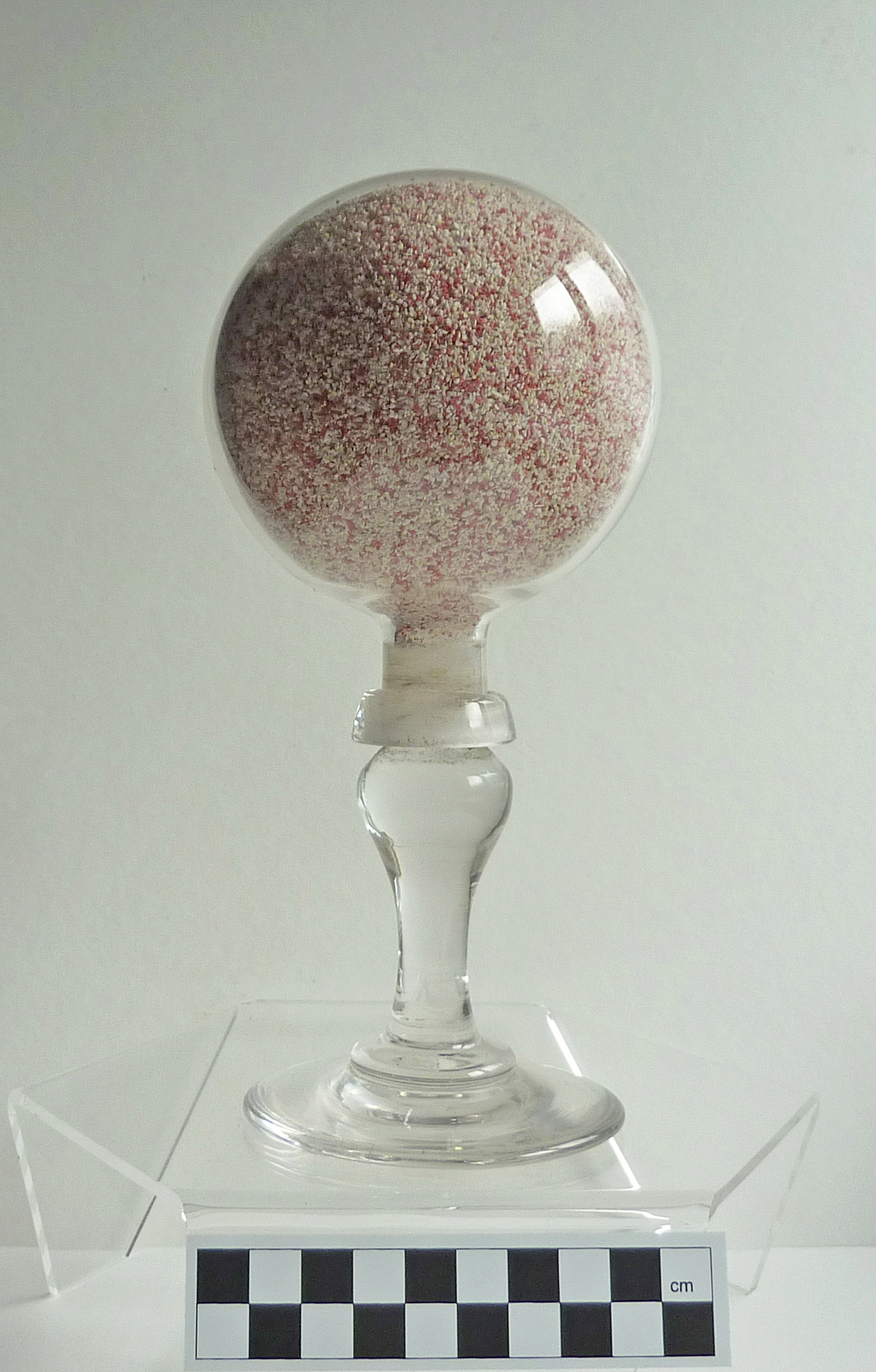
85 – Glass globe: Spirit house
- Physical description:
- Spirit House - lace maker's glass magnifying globe filled with fabric and pink and white (sugar?) grains.
- Museum classification:
- Spells & Charms
- Size:
- 175 mm high
- Information:
Original text by Cecil Williamson:
'If you conjure up a spirit, what do you do with it? Well, one method used by a Honiton-based witch was to give it a home in this one time lace maker's water filled glass globe magnifier. She got rid of the water, filled the globe with hundreds and thousands and invited the spirit to bed down and to make itself at home. As to whether it is still in residence, I do not know, nor have I tried to find out. But Katie Day is now long gone. I am old and have enough spirits on my hands without disturbing this one. They do say that old Katie's little fellow could be quite nasty at times. He has been with me for thirty years now - never any trouble at all, still I would not trust him with a stranger, tricky things, spirit folk.'
Cecil Williamson Object Label Collection 8986:
A WITCH’S GAZING GLASS. FOR USE THE GLOBE IS EMPTIED AND FILLED WITH WATER. THE GLOBE IS THEN POSITIONED TO CATCH THE RAYS OF THE LIGHT FROM A CANDLE. IT IS THEN USED AS ONE WOULD WHEN CRYSTAL GAZING. AFTER USE THE GLOBE IS REFILLED WITH THE RED AND WHITE GRAINS. THESE ARE USED TO KEEP OUT EVIL IMPS AND TO COUNTER THE POSSIBLE EFFECT OF THE EVIL EYE SHOULD IT CHANCE TO FALL ON THE GLOBE WHEN NOT IN USE. THIS GLASS BELONGED TO A CHARMER LIVING AT HONITON DEVON, WHICH GIVES THE CLUE TO THE GLASSES REAL USE. IT IS A LACE MAKERS GLASS, USED BY THE LACE MAKERS, WHEN FILLED WITH WATER AS A MAGNIFYING GLASS, TO HELP THEM SEE THE MINUTE STITCHES OF THEIR DELICATE AND INTRICATE WORK.
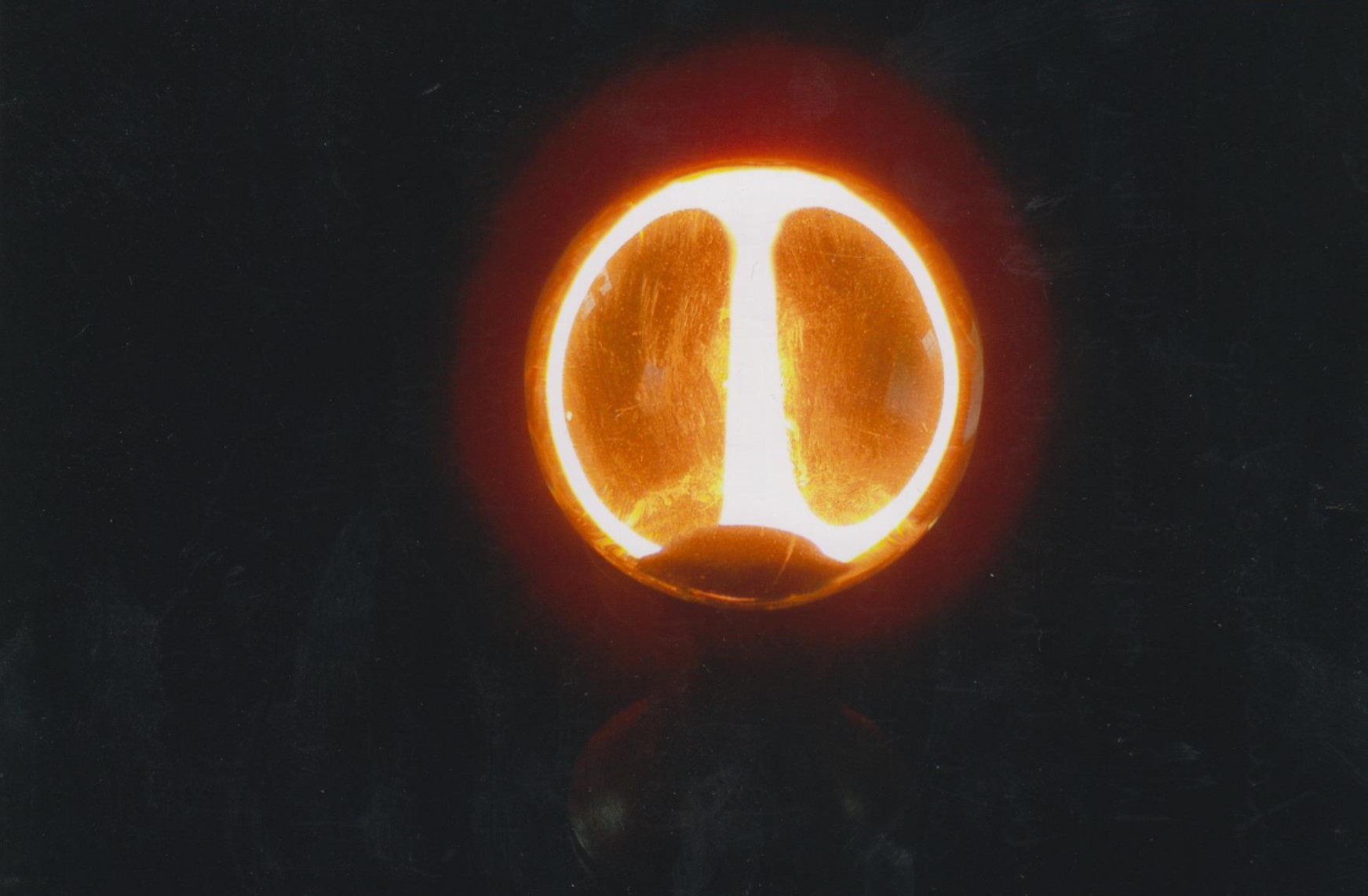
A friend of the Museum provided this photograph of a similar lace maker's globe being used for scrying using the water and candle method noted above.
 -------------
Mentioned in Doreen Valiente's description of the exhibits at Cecil Williamson's 'House of Spells' at Polperro (Transcripts from Doreen Valiente's Diaries 1959-1966, in the museum library (133.43 VAL), pp.29-34).- Resource:
- Object
- Materials:
- Glass, cloth, sugar(?)
- Copyright ownership:
- Copyright to The Museum of Witchcraft Ltd.
Original text by Cecil Williamson:
'If you conjure up a spirit, what do you do with it? Well, one method used by a Honiton-based witch was to give it a home in this one time lace maker's water filled glass globe magnifier. She got rid of the water, filled the globe with hundreds and thousands and invited the spirit to bed down and to make itself at home. As to whether it is still in residence, I do not know, nor have I tried to find out. But Katie Day is now long gone. I am old and have enough spirits on my hands without disturbing this one. They do say that old Katie's little fellow could be quite nasty at times. He has been with me for thirty years now - never any trouble at all, still I would not trust him with a stranger, tricky things, spirit folk.'
Cecil Williamson Object Label Collection 8986:
A WITCH’S GAZING GLASS. FOR USE THE GLOBE IS EMPTIED AND FILLED WITH WATER. THE GLOBE IS THEN POSITIONED TO CATCH THE RAYS OF THE LIGHT FROM A CANDLE. IT IS THEN USED AS ONE WOULD WHEN CRYSTAL GAZING. AFTER USE THE GLOBE IS REFILLED WITH THE RED AND WHITE GRAINS. THESE ARE USED TO KEEP OUT EVIL IMPS AND TO COUNTER THE POSSIBLE EFFECT OF THE EVIL EYE SHOULD IT CHANCE TO FALL ON THE GLOBE WHEN NOT IN USE. THIS GLASS BELONGED TO A CHARMER LIVING AT HONITON DEVON, WHICH GIVES THE CLUE TO THE GLASSES REAL USE. IT IS A LACE MAKERS GLASS, USED BY THE LACE MAKERS, WHEN FILLED WITH WATER AS A MAGNIFYING GLASS, TO HELP THEM SEE THE MINUTE STITCHES OF THEIR DELICATE AND INTRICATE WORK.
A friend of the Museum provided this photograph of a similar lace maker's globe being used for scrying using the water and candle method noted above.
-------------
Mentioned in Doreen Valiente's description of the exhibits at Cecil Williamson's 'House of Spells' at Polperro (Transcripts from Doreen Valiente's Diaries 1959-1966, in the museum library (133.43 VAL), pp.29-34).