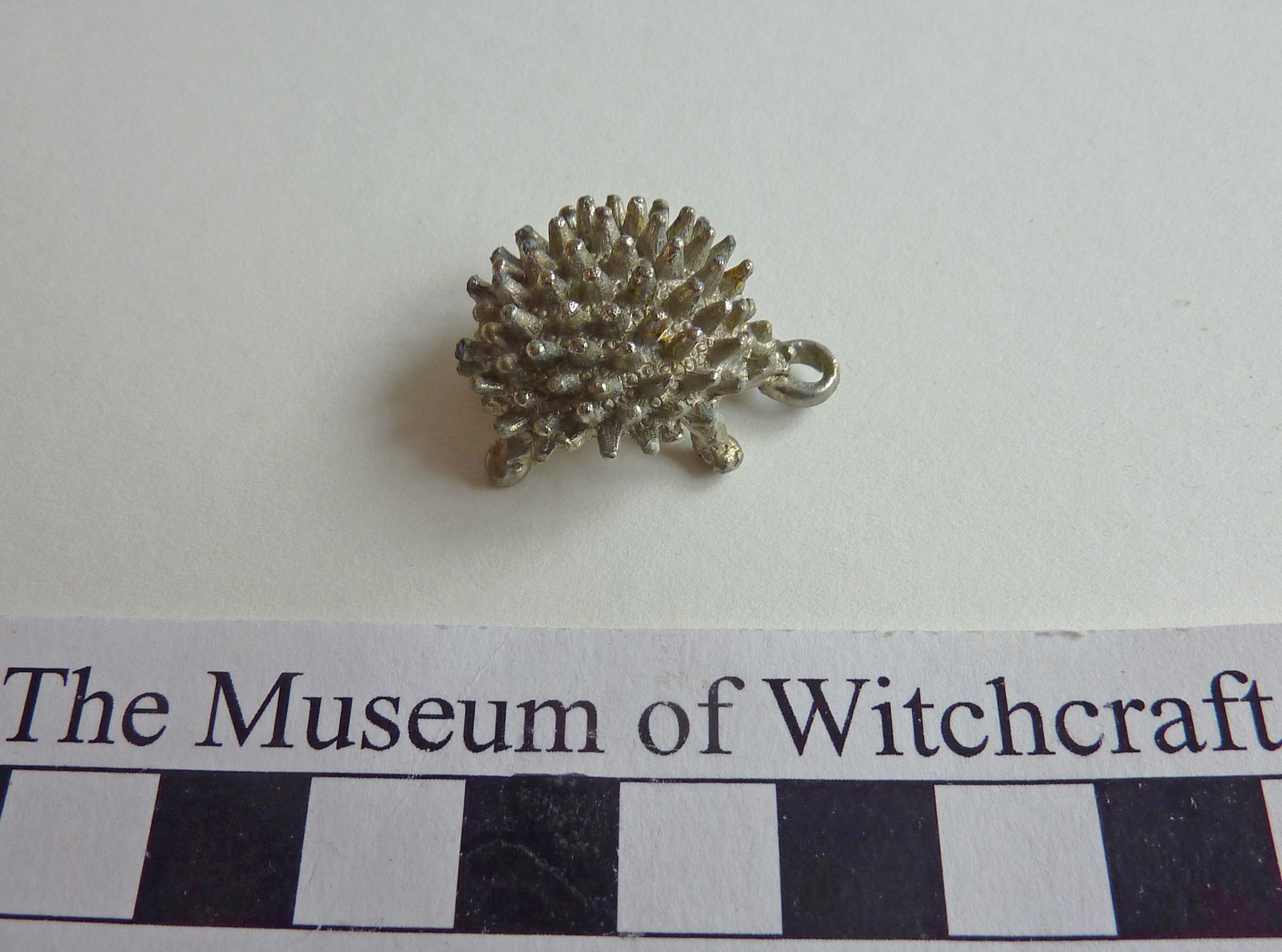
2995 – Hedgehog Charm: Souvenir
- Physical description:
- A small silver-coloured metal hedgehog, stylised, with disproportionally large spines. There are traces of a brass-coloured lacquer on the underside. There is an integral ring at the head end so that it can be worn. Sold as a charm by William Henry Paynter at his Cornish Museum at East Looe.
- Museum classification:
- Spells and Charms
- Size:
- 30 x 25 x 15
- Information:
The hedgehog was still inside the plastic bag attaching it to its backing card at the time of the 2004 flood, which filled the bag with mud. It has now been removed from its packaging and cleaned, but the packaging has been preserved.
The backing card (which is water-damaged) reads, "A Piece of Cornish History. No. 16. THE WITCH HEDGEHOG. The hedgehog was one of the animals witches turned themselves into, radiating their powers into non-believers through the spine tips of their bodies, giving them good fortune and luck.But it was only a trick to get them to succumb to the witches' powers when the moon was on its last quarter to remove evil spells. This is still a very strong belief in Cornwall to this very day."
This charm was probably specially made for the witchcraft-researcher William Henry Paynter for sale at his museum at East Looe, which he opened in 1959.- Resource:
- Object
- Materials:
- Metal
The hedgehog was still inside the plastic bag attaching it to its backing card at the time of the 2004 flood, which filled the bag with mud. It has now been removed from its packaging and cleaned, but the packaging has been preserved.
The backing card (which is water-damaged) reads, "A Piece of Cornish History. No. 16. THE WITCH HEDGEHOG. The hedgehog was one of the animals witches turned themselves into, radiating their powers into non-believers through the spine tips of their bodies, giving them good fortune and luck.But it was only a trick to get them to succumb to the witches' powers when the moon was on its last quarter to remove evil spells. This is still a very strong belief in Cornwall to this very day."
This charm was probably specially made for the witchcraft-researcher William Henry Paynter for sale at his museum at East Looe, which he opened in 1959.