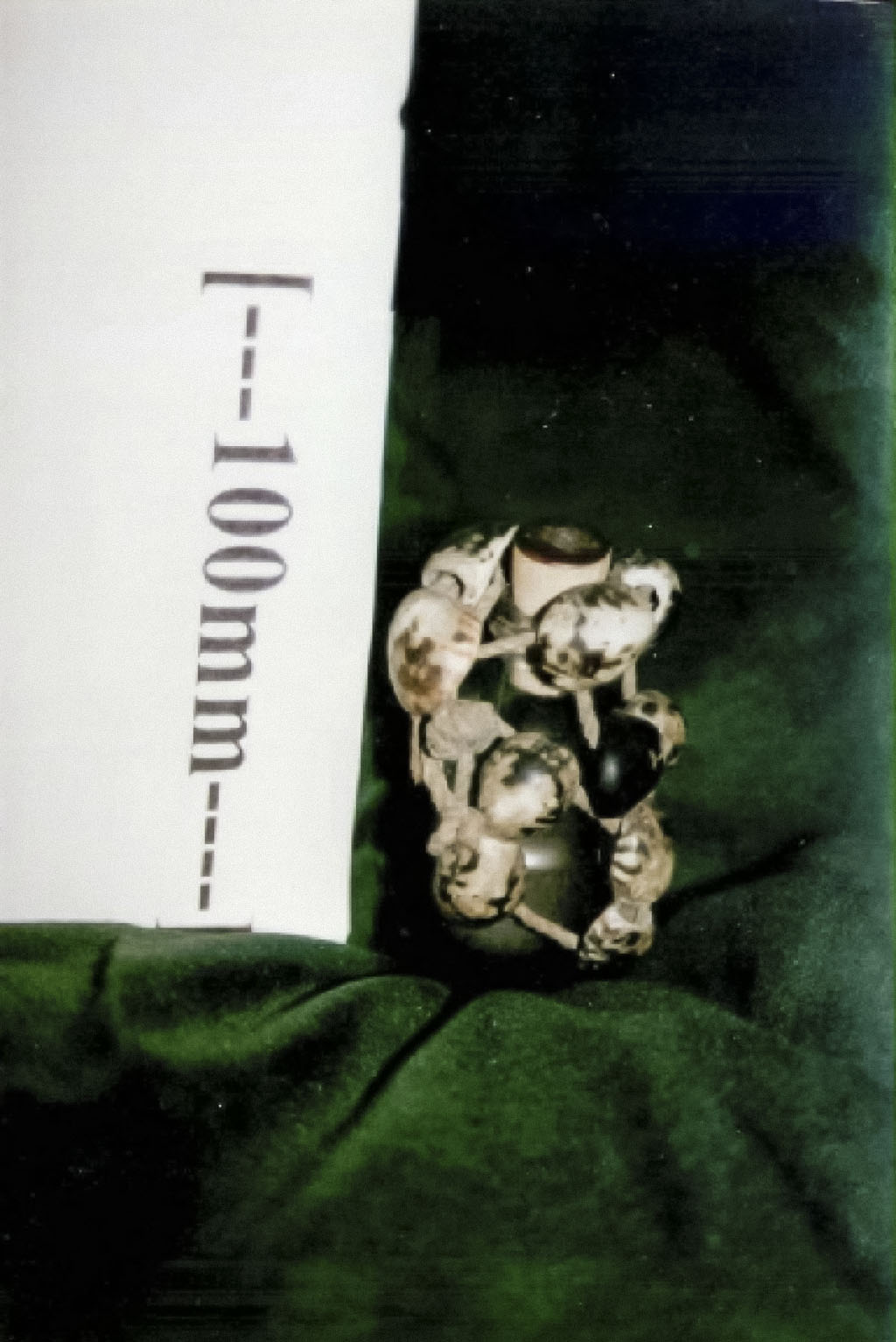
89 – Bottle with shells and Mercury
- Physical description:
- Small glass bottle half full of mercury and decorated with shells on string.
- Museum classification:
- Spells & Charms
- Size:
- 75mm height
- Information:
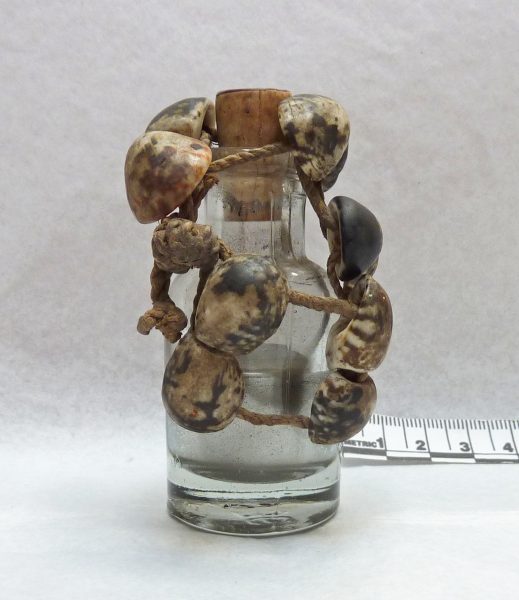
Original text by Cecil Williamson: 'Mercury - or quicksilver - always regarded as a living mystical metal, beloved of witches and sages. This little bottle of mercury gay with its ring of small shells was used by a wise woman living in Penzance in about 1905. She earned money by telling the weather from it for fishermen. A Newlyn-based artist acquired this small bottle and treasured it as a totem, or house spirit charm which he swore brought him luck. He said the wise woman's name was Janie Rowe or Rouse, he was not quite sure which was the correct name.'
The Lovett Collection in the Cuming Museum has a bottle of mercury, covered with grey leather, which was apparently sold commercially in London in 1916 to be carried as a cure for rheumatism. Scarborough Museum also has one of these rheumatism cures (see Tabitha Cadbury's report 'The Clarke Collection of Charms and Amulets' in the museum library).The picture at top shows the original arrangement of the shells around the bottle (the shells simply rest on the bottle loosely).
- Resource:
- Object
- Materials:
- Glass, mercury, shells
- Copyright ownership:
- Copyright to The Museum of Witchcraft Ltd.
Original text by Cecil Williamson: 'Mercury - or quicksilver - always regarded as a living mystical metal, beloved of witches and sages. This little bottle of mercury gay with its ring of small shells was used by a wise woman living in Penzance in about 1905. She earned money by telling the weather from it for fishermen. A Newlyn-based artist acquired this small bottle and treasured it as a totem, or house spirit charm which he swore brought him luck. He said the wise woman's name was Janie Rowe or Rouse, he was not quite sure which was the correct name.'
The Lovett Collection in the Cuming Museum has a bottle of mercury, covered with grey leather, which was apparently sold commercially in London in 1916 to be carried as a cure for rheumatism. Scarborough Museum also has one of these rheumatism cures (see Tabitha Cadbury's report 'The Clarke Collection of Charms and Amulets' in the museum library).
The picture at top shows the original arrangement of the shells around the bottle (the shells simply rest on the bottle loosely).