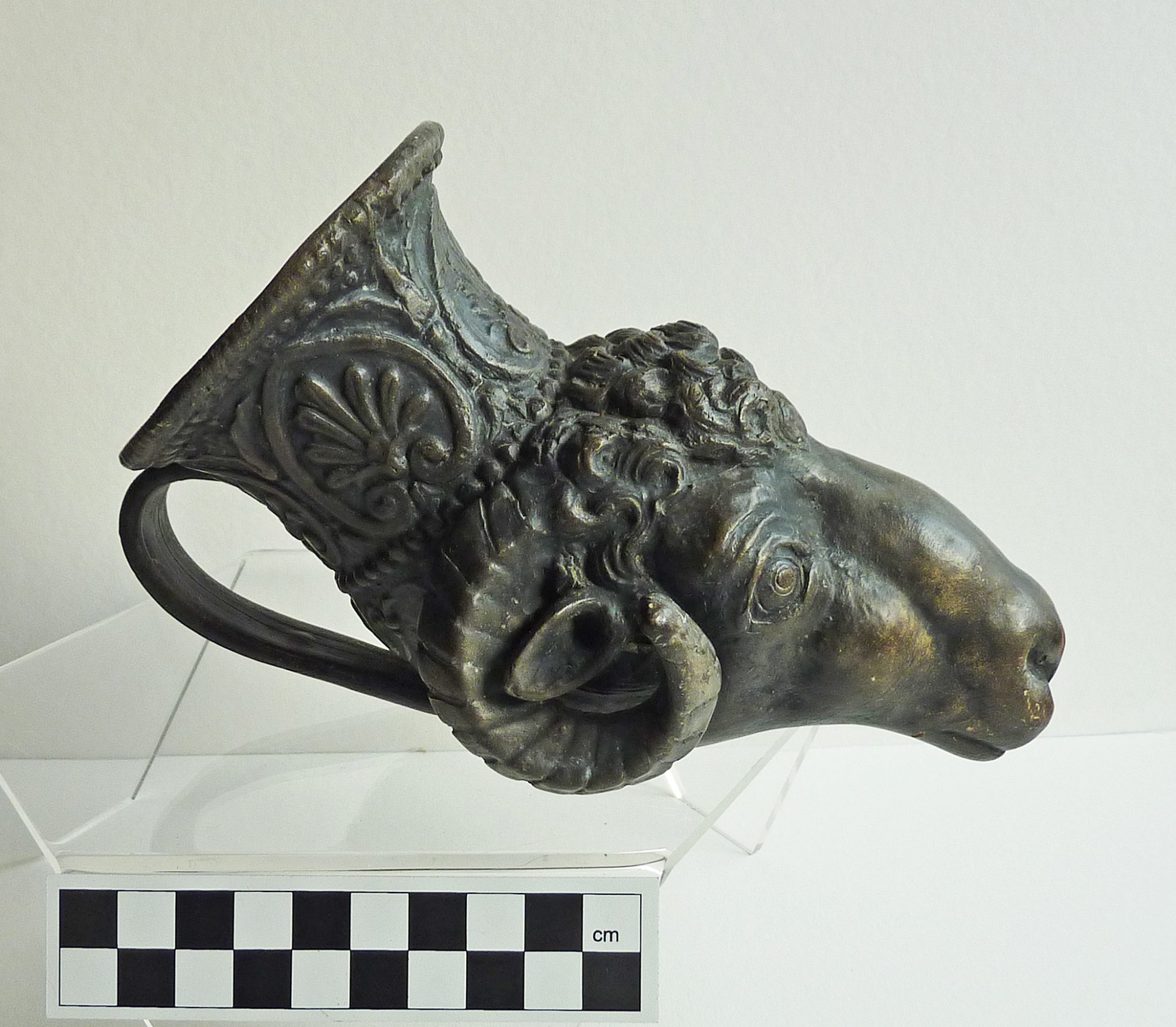
115 – Ram’s Head Drinking Cup – Rhyton
- Physical description:
- A ceramic drinking cup in the shape of a ram's head, known as a Rhyton. The head is finely moulded and characterful, and the upper section of the cup has stylised acanthus-leaf decoration. It is made of buff-coloured clay with a finish resembling bronze.
- Museum classification:
- Horned God
- Size:
- 170 x 110 x 130
- Information:
This resembles a picture in the Richel Collection - R/7/1007.
It seems to be identical to an example in the Museum of Fine Arts in Budapest, which dates to the late 19th Century. A rhyton /ˈraɪˌtɒn, ˈraɪtən/ (pl.: rhytons or, following the Greek plural, rhyta) is a roughly conical container from which fluids were intended to be drunk or to be poured in some ceremony such as libation, or merely at table; in other words, a cup. A rhyton is typically formed in the shape of either an animal's head or an animal horn; in the latter case it often terminates in the shape of an animal's body. Rhyta were produced over large areas of ancient Eurasia during the Bronze and Iron Ages, especially from Persia to the Balkans.
- Resource:
- Object
- Materials:
- Ceramic
- Copyright ownership:
- MWM
This resembles a picture in the Richel Collection - R/7/1007.
It seems to be identical to an example in the Museum of Fine Arts in Budapest, which dates to the late 19th Century. A rhyton /ˈraɪˌtɒn, ˈraɪtən/ (pl.: rhytons or, following the Greek plural, rhyta) is a roughly conical container from which fluids were intended to be drunk or to be poured in some ceremony such as libation, or merely at table; in other words, a cup. A rhyton is typically formed in the shape of either an animal's head or an animal horn; in the latter case it often terminates in the shape of an animal's body. Rhyta were produced over large areas of ancient Eurasia during the Bronze and Iron Ages, especially from Persia to the Balkans.