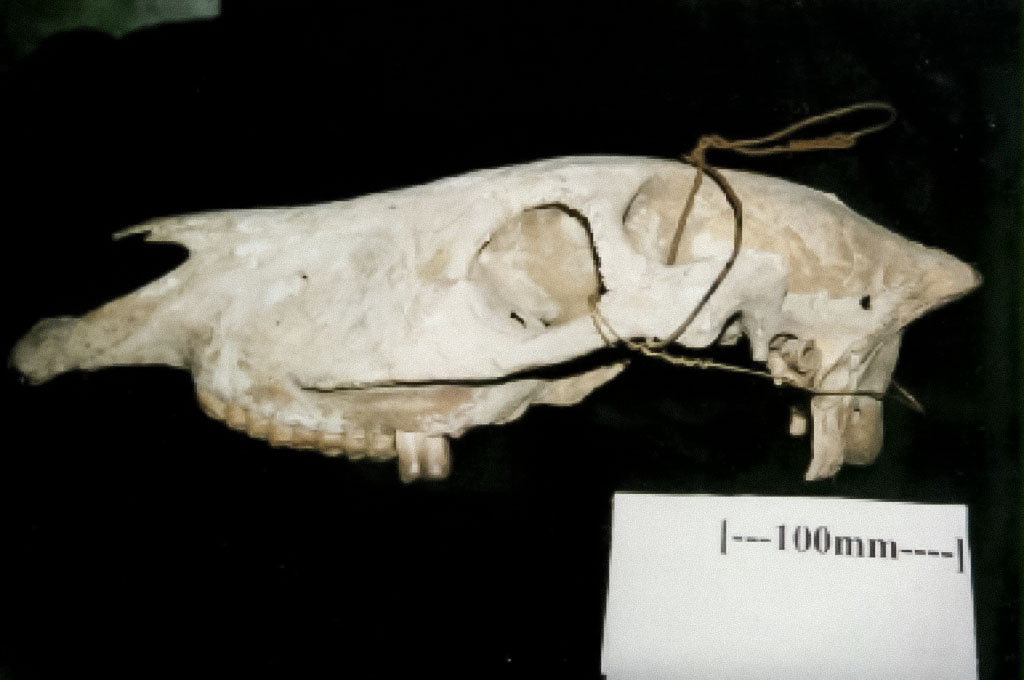
134 – Horse skull
- Physical description:
- Horse's skull.
- Museum classification:
- Protection
- Size:
- 500x150x195
- Information:
Original text by Cecil Williamson: 'The folklore of the preserved horse skull is vast. The belief that the spirit would look kindly upon those who kept and displayed these symbols of a now almost forgotten mythology is world wide. This example came from a farm in the Drewsteignton area where it had hung high up on the cross beam of the main barn since 1927 as a home for the nightmare riding spirits.'
In pre-Christian Germanic magic, placing a curse on an enemy involved sacrificing a horse and putting the head on a pole, facing in the direction of the person cursed. This was to direct the wrath of the gods against the person. The use of horses' skulls as protection magic may be derived from this practice. See 'Barbarian Rites' by Hans-Peter Hasenfratz.Some horse skulls have been found in Elsdon Church in Northumberland (information supplied by visitors to the museum).
- Resource:
- Object
- Materials:
- Bone
- Copyright ownership:
- Copyright to The Museum of Witchcraft Ltd.
Original text by Cecil Williamson: 'The folklore of the preserved horse skull is vast. The belief that the spirit would look kindly upon those who kept and displayed these symbols of a now almost forgotten mythology is world wide. This example came from a farm in the Drewsteignton area where it had hung high up on the cross beam of the main barn since 1927 as a home for the nightmare riding spirits.'
In pre-Christian Germanic magic, placing a curse on an enemy involved sacrificing a horse and putting the head on a pole, facing in the direction of the person cursed. This was to direct the wrath of the gods against the person. The use of horses' skulls as protection magic may be derived from this practice. See 'Barbarian Rites' by Hans-Peter Hasenfratz.
Some horse skulls have been found in Elsdon Church in Northumberland (information supplied by visitors to the museum).