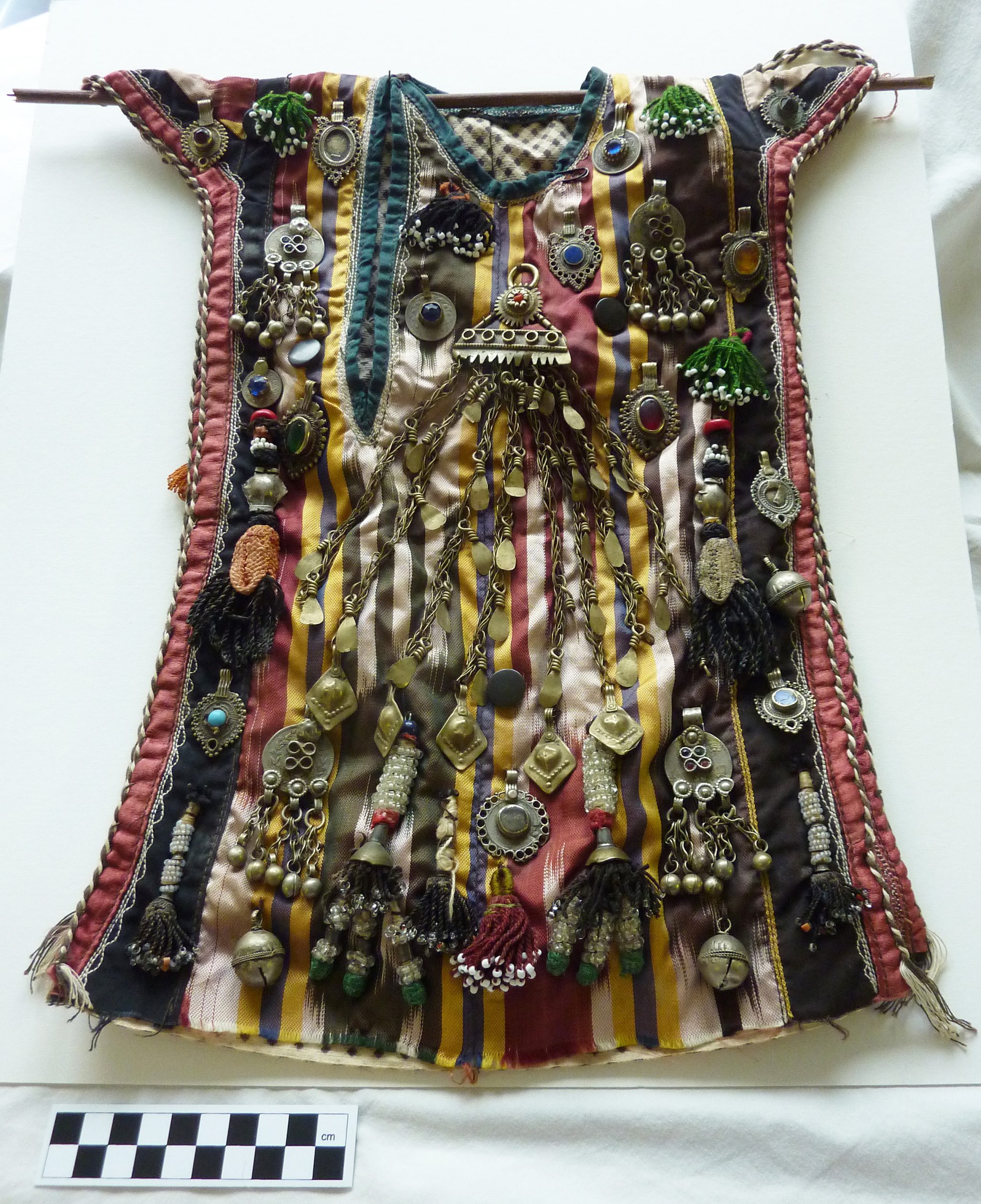
4248 – Kuchi Coin Dress
- Physical description:
- A child's robe made of multi-coloured striped fabric decorated with numerous objects of amuletic significance. They include bells, coins, glass beads, coloured threads, semi-precious stones and elaborate pieces of fine metalwork. From Afghanistan.
- Museum classification:
- Protection
- Size:
- 420 x 380 x 30
- Information:
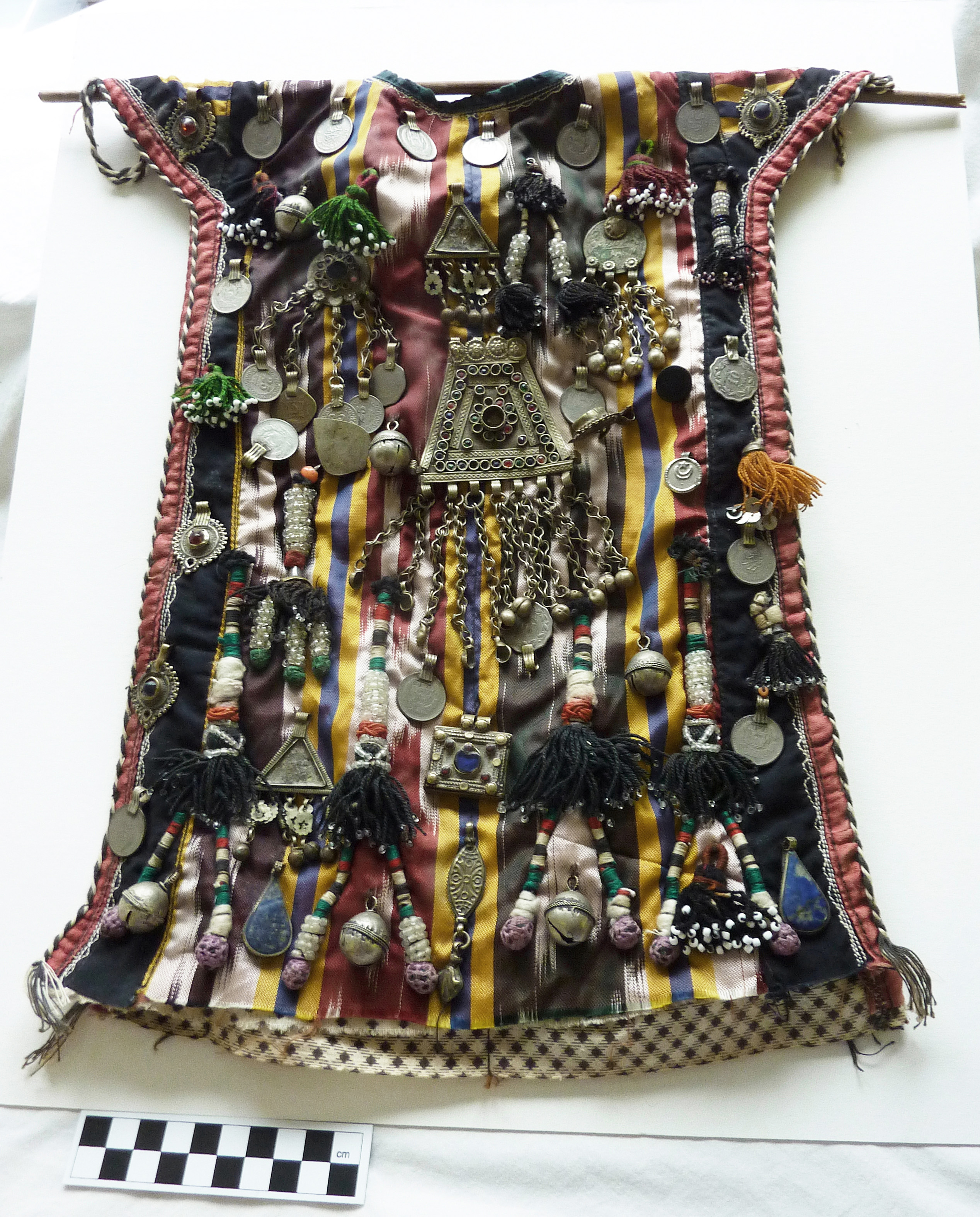
Hand-made, traditional tribal/Afghan Kuchi coin dress. The Kuchi (or Kochi), a relatively recent term, refers to communities of mostly nomadic peoples — and in the context of Afghanistan, many are of Pashtun ethnicity. (1621)
The Significance of Coins, Mirrors, and Shells
The extensive use of metal coins, small mirrors, and cowrie shells on Kuchi clothing is rooted in both cultural heritage and folk protective magic.Protection (Evil Eye): Mirrors and jingling metal elements are believed to reflect negative energy and ward off evil spirits, making them essential protective components.
Prosperity and Wealth: The coins (often antique Persian, Indian, or Pakistani currency) symbolize abundance, fertility, and the wearer’s economic status.
Sound and Movement: The jingling of coins and small bells (ghungroos) is intended to create a pleasant, rhythmic sound as the wearer moves, especially during, traditional dances.
Cultural Identity: The “gul-i peron” (felt patches) and other, detailed embroidery are often used to signify specific tribal affiliations or regions.
- Resource:
- Object
- Materials:
- Fabric, metal, glass, gemstones
- Copyright ownership:
- MWM
Hand-made, traditional tribal/Afghan Kuchi coin dress. The Kuchi (or Kochi), a relatively recent term, refers to communities of mostly nomadic peoples — and in the context of Afghanistan, many are of Pashtun ethnicity. (1621)
The Significance of Coins, Mirrors, and Shells
The extensive use of metal coins, small mirrors, and cowrie shells on Kuchi clothing is rooted in both cultural heritage and folk protective magic.
Protection (Evil Eye): Mirrors and jingling metal elements are believed to reflect negative energy and ward off evil spirits, making them essential protective components.
Prosperity and Wealth: The coins (often antique Persian, Indian, or Pakistani currency) symbolize abundance, fertility, and the wearer’s economic status.
Sound and Movement: The jingling of coins and small bells (ghungroos) is intended to create a pleasant, rhythmic sound as the wearer moves, especially during, traditional dances.
Cultural Identity: The “gul-i peron” (felt patches) and other, detailed embroidery are often used to signify specific tribal affiliations or regions.